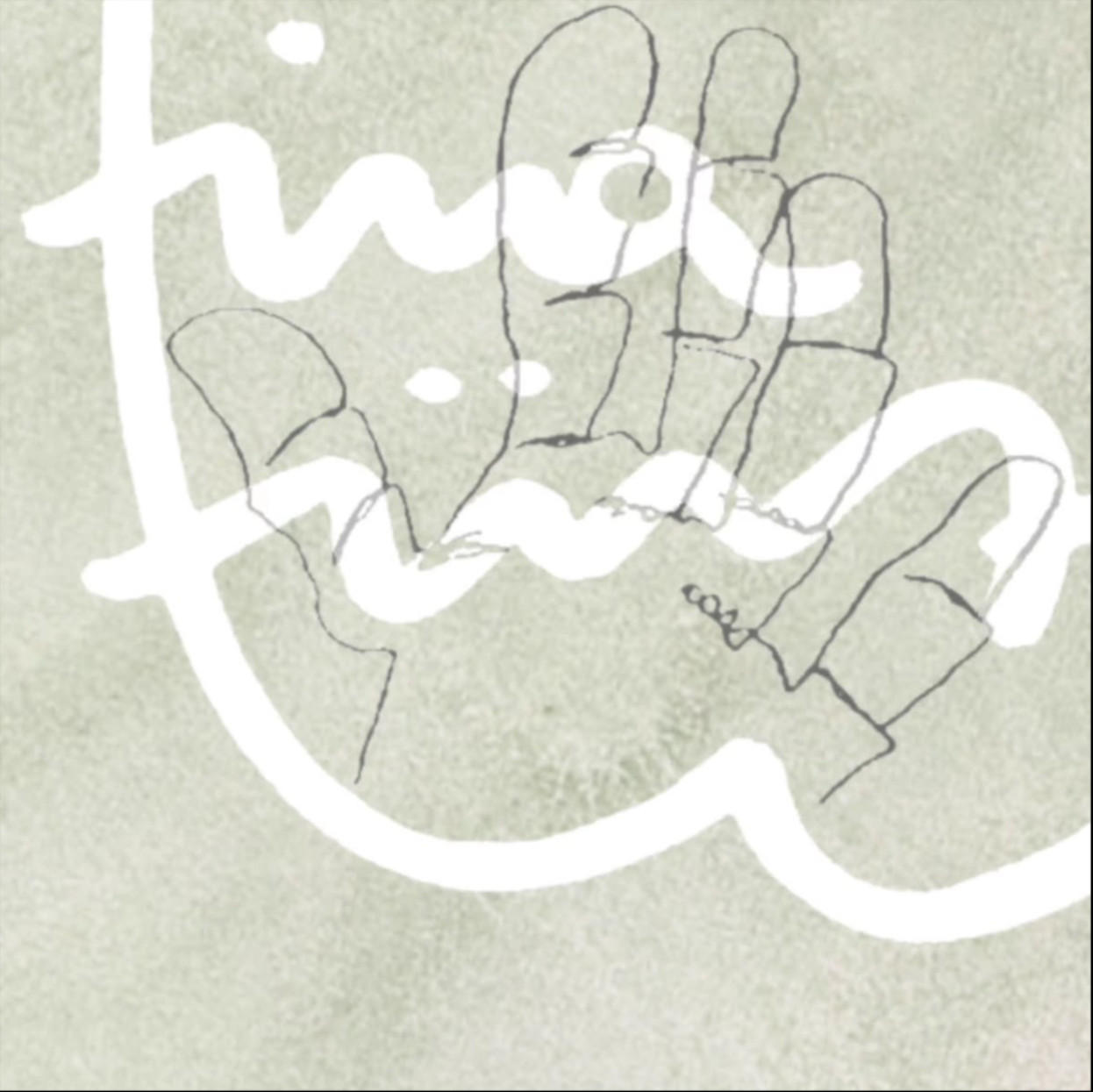
Combining eroded natural materials with fragmented excerpts from Faust (Parts I and II), this work explores erosion as both a physical and epistemological process. Stones, driftwood, oxidized metal, and destabilized language form layered structures that evoke geological time. Removed from narrative continuity, text becomes material residue, positioning texture as a site where emotion emerges through accumulation, fragmentation, and loss.
Expiration I – Geology of a Life, 2026
Mixed Media Installation
40x60cm
750 EUR
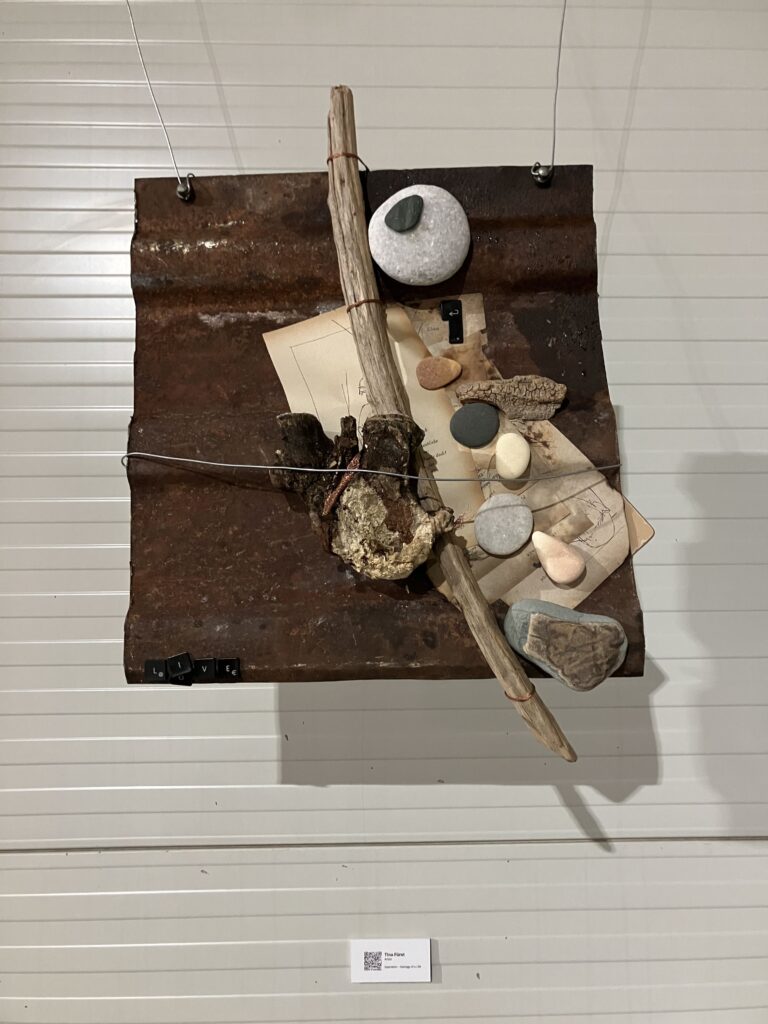
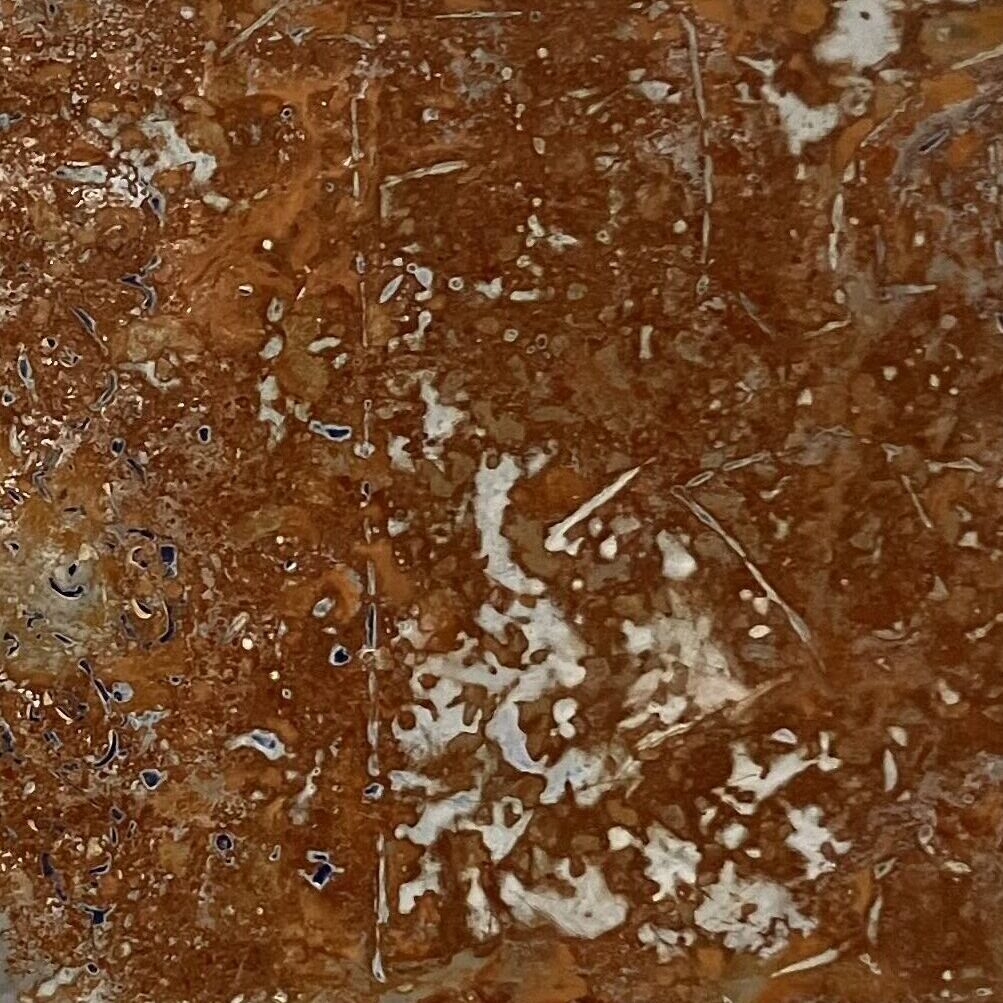
It was exhibited in combination with Expiration II – Geology of a Life. Presented within the exhibition Trame, Expiration I and II – Geology of a Life examines erosion as both a material process and a metaphor for human consciousness. The work brings together naturally weathered elements—stones, driftwood, and oxidized metal—with fragmented textual excerpts from Faust (Parts I and II). These components are assembled as stratified layers, evoking geological formations in which time, pressure, and accumulation shape form and meaning.
The natural materials register the slow, impersonal forces of environmental transformation, while the literary fragments—detached from their original narrative and semantic continuity—function as residual traces of human ambition, knowledge, and desire. Language, traditionally a stabilizing structure, is rendered unstable and materially vulnerable, subject to the same processes of decay as the physical elements that surround it.
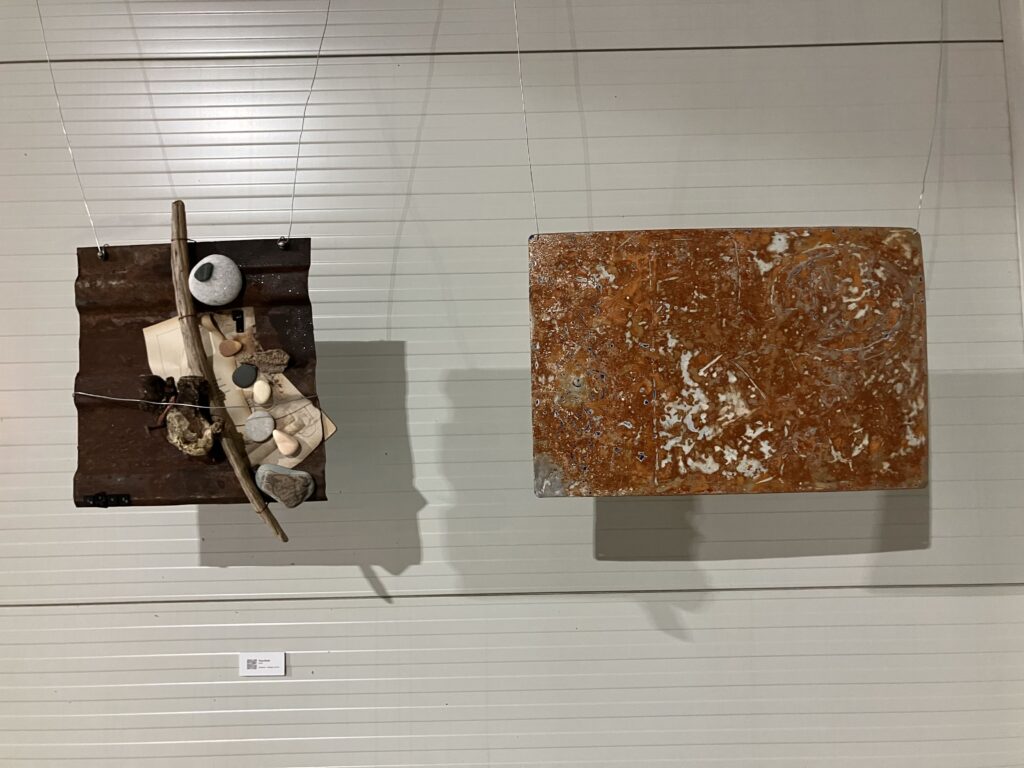
Through suspension, fragmentation, and material tension, the work proposes erosion as an epistemological condition: a state in which identity, memory, and knowledge are continuously reshaped. Within Trame, Expiration I and II – Geology of a Life positions texture as a site where emotion emerges indirectly—through density, absence, and temporal accumulation—rather than through representation.
“If ever to the moment I shall say: ‘Beautiful moment, do not pass away!’ ”
Johann Wolfgang von Goethe, Faust I
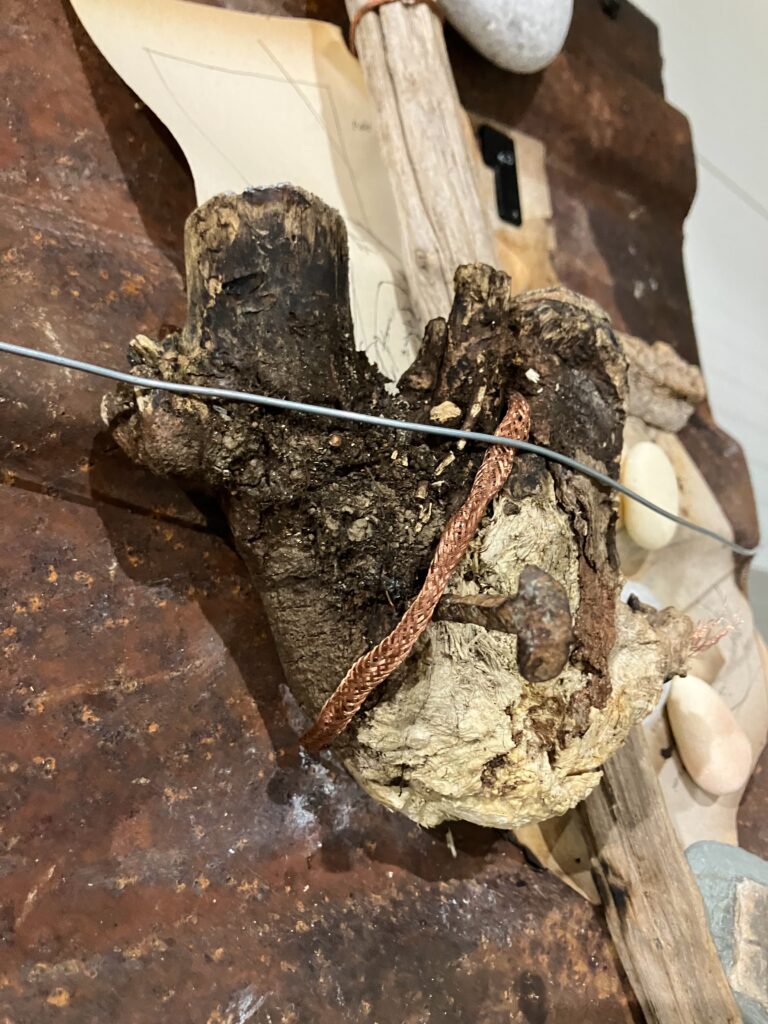
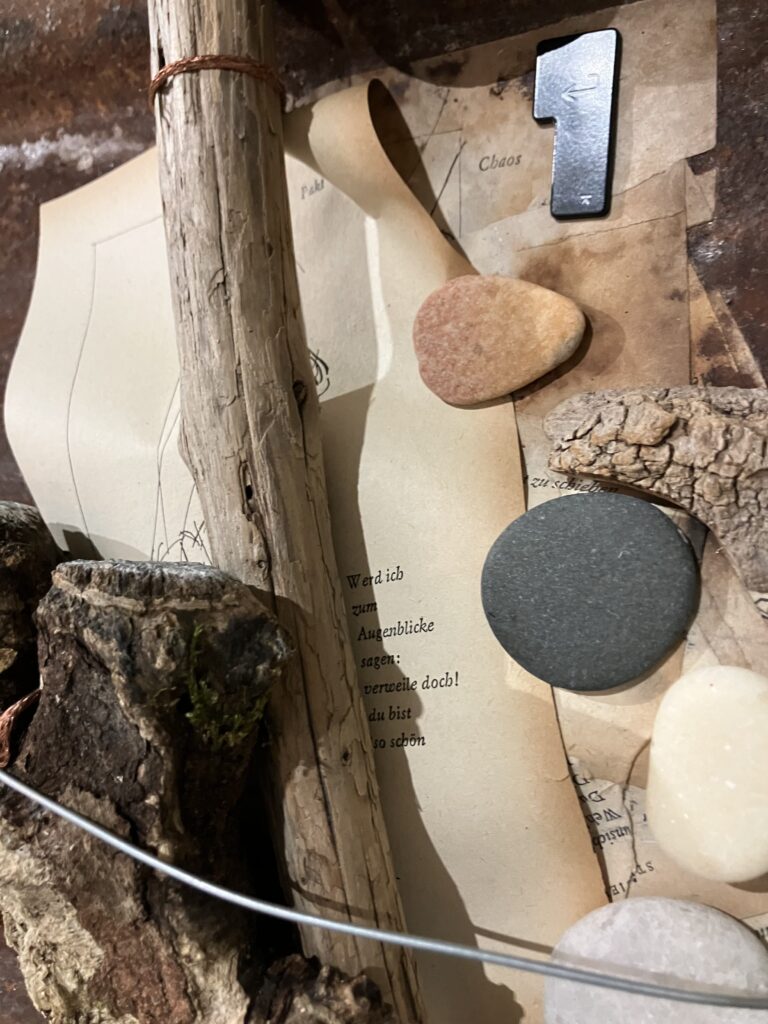
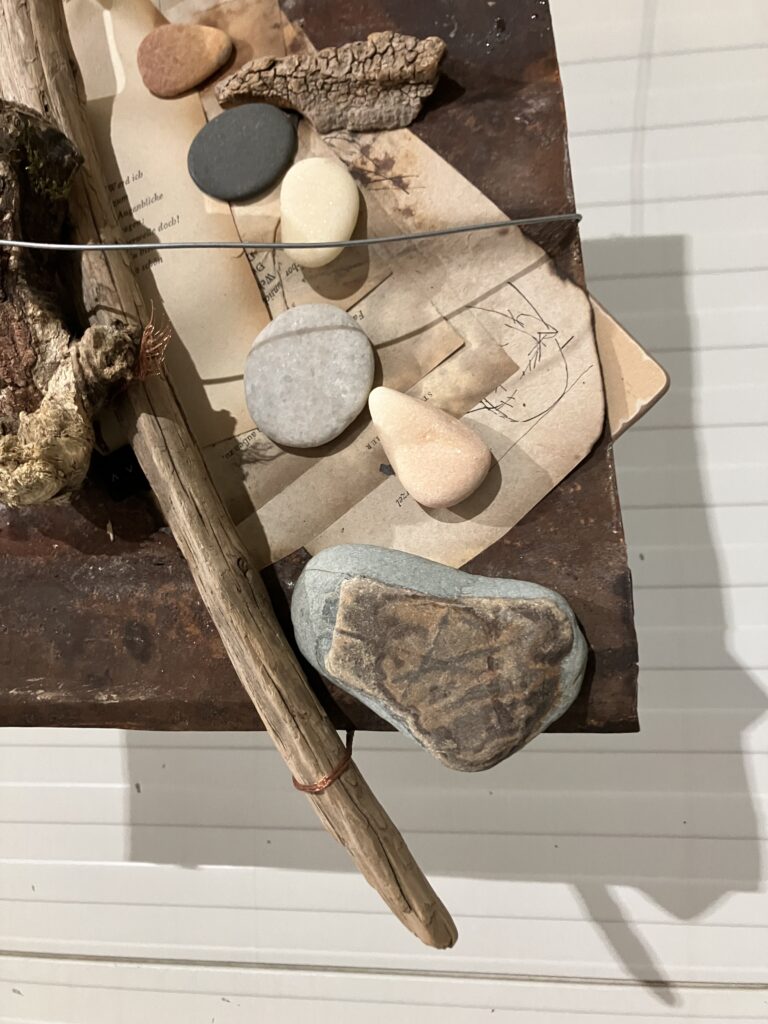
The work incorporates a textual excerpt from Faust I — “If ever to the moment I shall say: ‘Beautiful moment, do not pass away!’” — which is embedded in the composition in its original German form. I understand this text as a reminder of the fluidity and irreversibility of time, and of the human inability to control or arrest its passage. Rather than serving as a literary reference, the excerpt functions as a conceptual marker within the work, emphasizing acceptance of temporality as a natural condition.
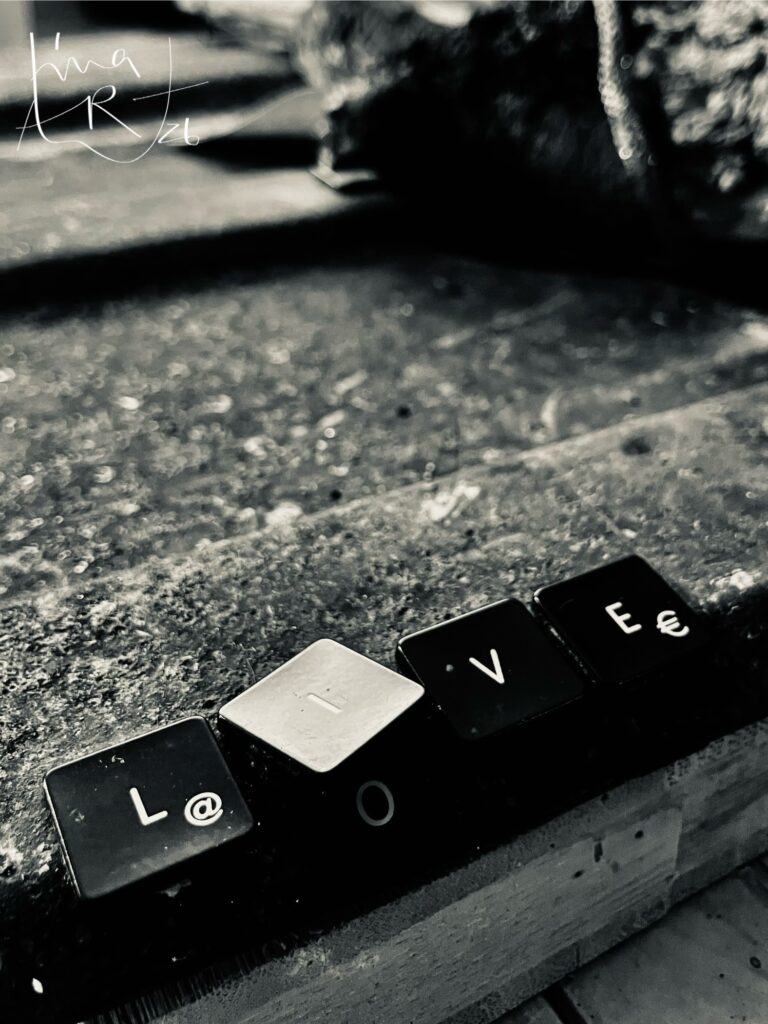
In dialogue with this historical text, I introduce a contemporary letter-based intervention that plays with the words love and live. This element brings Goethe’s reflection into a twenty-first-century context, establishing a temporal and conceptual bridge between historical thought and present-day modes of meaning-making.